What is a duplex house and what are its key features

When choosing a home in the suburbs, buyers often encounter housing types that appear similar at first glance: cottages, townhouses, duplexes, and quad houses. Because of their similar appearance, they are often confused, although there are significant differences between them that affect price, level of privacy, maintenance costs, and living comfort.
One popular option for families who want to live outside the city but aren’t ready to buy a detached house is a duplex. It combines the advantages of owning a home with a more affordable price compared to a detached house. Let’s take a closer look at what a duplex is, how it differs from a townhouse, and what pros and cons to consider before buying.
What is a duplex house?
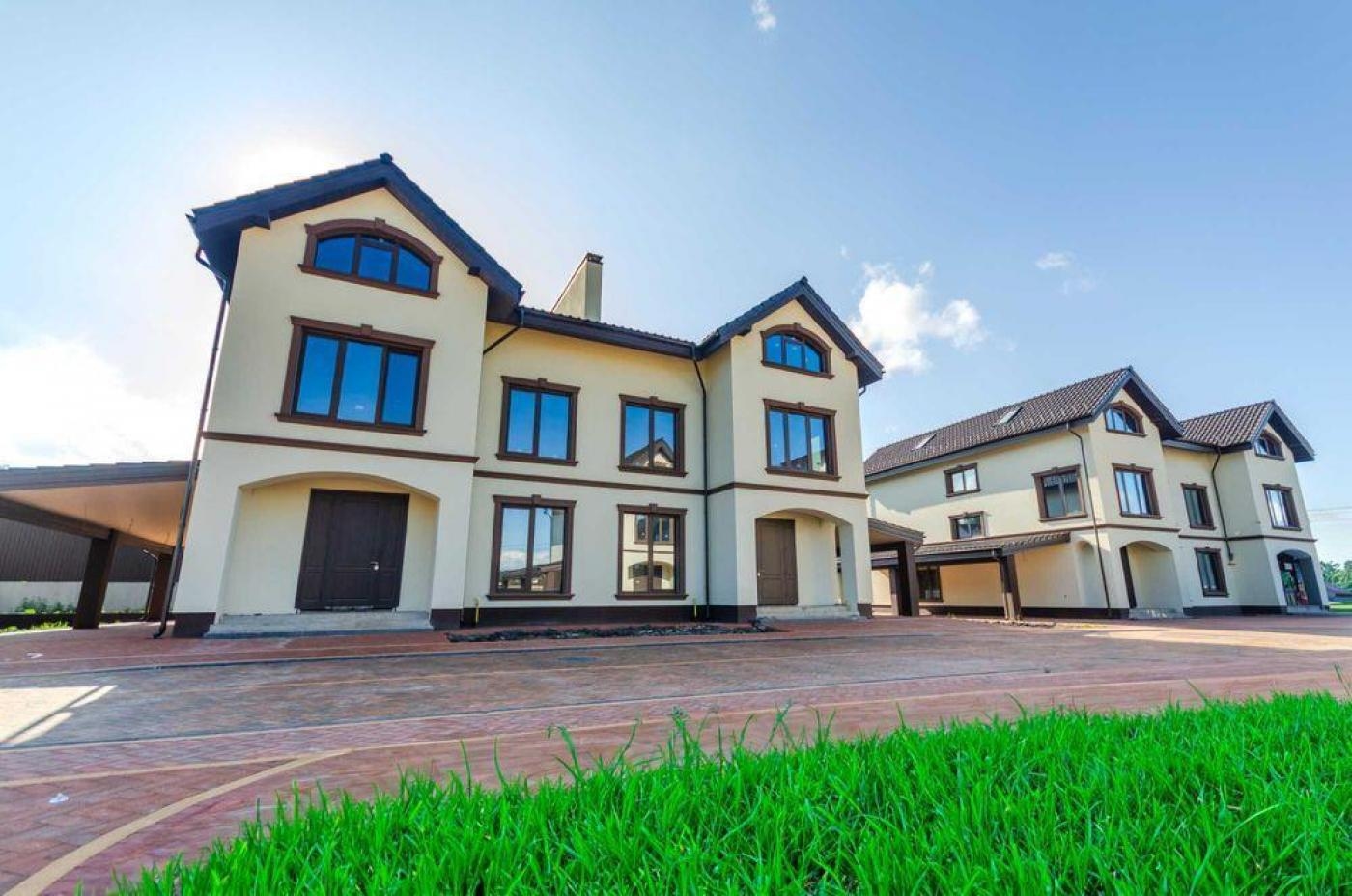
A duplex is a residential building divided by a load-bearing wall into two completely separate units, each with its own entrance. Each unit belongs to a different owner and constitutes a fully self-contained residence with its own kitchen, bathrooms, utilities, and separate lot.
Externally, a two-family home looks like a single cottage, but inside it is divided into two independent sections: the owners use only their own part of the house and lot. Most often, both halves have the same floor plan and square footage, although modern designs also allow for asymmetrical layouts, where one section is larger than the other.
Duplexes are common in new cottage communities and the suburbs of major cities. They are chosen by families who want to enjoy the benefits of country living on a reasonable budget.
Since “duplex” is an architectural term rather than a legal one, from a legal standpoint, such a house is registered according to the general rules that apply to any real estate with multiple owners. In practice, there are two scenarios. In some projects, the house is divided, meaning each half is registered as a separate real estate property with its own cadastral number, technical passport, and separate land plot, and constitutes a fully independent object of sale, mortgage, or inheritance. In other cases, the house remains a single property, and the buyer acquires a share in joint ownership with a specified right to use a specific half. In the latter case, any real estate transactions and the division of the jointly owned property require the consent of the other co-owner.
How does a duplex differ from a townhouse?
Both formats combine several residential sections within a single building, but there are fundamental differences between them.
The main difference is the number of residential units. A duplex consists of only two separate units, whereas a townhouse comprises three, four, six, or more units arranged in a row. This also accounts for the difference in privacy: in a duplex, there is only one neighbor, since the house borders the adjacent lot on one side. In a townhouse, most owners have neighbors on both sides, with the exception of the end units, so the likelihood of household noise is higher here.
The size of the lot also varies. Duplex owners tend to have more spacious lots where they can set up a garden, a gazebo, a parking area, or a playground, whereas townhouses typically have smaller lots. There is also a difference in architecture: duplexes more often resemble classic country homes, while townhouses are designed as a long row of identical units.
A brief overview of the key differences between a duplex and a townhouse:
Criterion | Duplex | Townhouse |
|---|---|---|
Number of sections | 2 | 3 or more |
Number of neighbors | One | Most often, two |
Lot size | More | Less |
Privacy | Above | Below |
Price per m² | Above | Below |
Appearance | It looks like a single-family home | A series of identical sections |
The difference in price is due to the fact that a duplex has fewer neighbors and a larger lot size, so the price per square meter is usually higher than that of a townhouse. That said, a duplex is still more affordable than a detached cottage.
Advantages of a duplex
The duplex layout offers buyers a number of practical advantages over other types of suburban housing:
A more affordable price compared to a single-family home. The cost of a duplex is usually lower than that of a comparable single-family home due to the building’s shared structure and more efficient use of the lot.
Private entrance and independent living space. Each family has its own separate entrance, private yard, and parking space, creating the feeling of living in a fully private home.
Just one neighbor. Compared to a townhouse, a duplex offers a higher level of privacy, since there is only one shared wall.
Cost-effective maintenance. A shared wall reduces heat loss, which helps save on heating costs in the winter, and the owners can work together to address some of the issues related to roof maintenance or landscaping.
The opportunity to live close to loved ones. Duplexes are often purchased by two families—parents and their adult children, siblings, or friends—which allows them to live next door to one another while maintaining their personal space.
Modern floor plans. Most new projects take current comfort requirements into account: a spacious kitchen-living room, multiple bathrooms, walk-in closets, terraces, balconies, and a garage or carport.
All these advantages make the duplex one of the most well-balanced options on the suburban real estate market.
Disadvantages of a duplex
Along with its advantages, a duplex also has some limitations that are worth considering before buying.
The main drawback is sharing a common wall with neighbors. Even with the good sound insulation found in modern designs, it’s impossible to completely eliminate noise transmission, so living comfort depends largely on the neighbors’ behavior and the quality of construction. If the units share a roof, facade, or utility systems, major repairs may require the consent and participation of both owners. To avoid disputes, you should review the documents in advance and determine the procedures for maintaining the common property.
Major structural changes to the building may also be restricted, especially if load-bearing walls or other common structural elements of the house are involved. Furthermore, even if you own your own lot, a duplex does not offer the same level of independence as a detached house.
The quality of construction can vary significantly from one project to another. When choosing a duplex, it’s important to consider the floor plan, the thickness of the partition wall, the quality of sound insulation, the construction materials, the building systems, and the legal status of the land parcel.
Who is a duplex right for?
A duplex is a great choice for buyers who want to live in their own home but aren’t willing to overpay for a standalone cottage. This type of property is ideal for young families, families with children, and those planning to move from an apartment to a more spacious home with its own lot.
Duplexes are also often chosen by relatives who want to live close to one another while maintaining their independence. This is a convenient solution for multiple generations of the same family or close friends. In addition, such properties may be of interest to investors. With a good location, one half of the home can be used as a residence, while the other half can be rented out on a long-term basis to generate additional income. In any of these scenarios, it’s worth asking the seller exactly who your neighbors will be, as this affects the comfort of living in a duplex.
If you'd like to find out what duplexes are available for sale in Kyiv and the Kyiv region, please contact us in whatever way is most convenient for you. Our agents will select properties that match your criteria and help you complete the transaction.